
Polishing Wheel
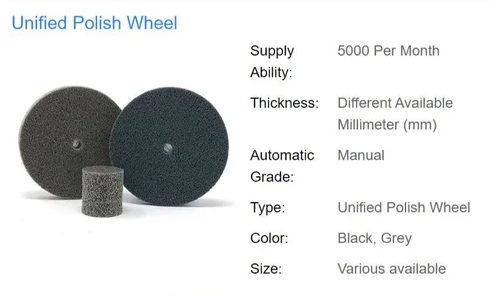
A polishing wheel, also known as a buffing wheel, is a rotary tool used to smooth and polish surfaces, typically metal or plastics. It's essentially a wheel made of layers of fabric or other materials, often impregnated with abrasive and adhesive, and used in conjunction with a polishing compound. The wheel spins, applying the compound to the surface and creating a smooth, shiny finish.
Here's a more detailed description:
Structure and Materials:
-
Layers:
Polishing wheels are constructed from multiple layers of fabric or other materials, such as wool, cotton, or non-woven fibers.
-
Impregnation:
The wheel's layers are often impregnated with abrasive and adhesive compounds, which help to remove imperfections and create a smooth surface.
-
Types of Materials:
Different materials are used depending on the desired level of polish and the type of surface being worked on. For example, wool is often used for fine polishing, while non-woven fibers are suitable for rougher surfaces.
How it Works:
-
1. Compound Application:
A polishing compound is applied to the rotating wheel.
-
2. Rotation:
The wheel rotates, bringing the compound into contact with the surface being polished.
-
3. Smoothing and Polishing:
The rotating wheel, along with the abrasive compound, removes scratches, imperfections, and other blemishes, leaving a smooth and shiny finish.
-
4. Finishing Touches:
Depending on the desired outcome, a final polish may be achieved using a finer abrasive compound or a softer wheel.
Applications:
-
Metal Polishing:
Commonly used to polish metal surfaces, including jewelry, hardware, and metal products.
-
Plastic Polishing:
Can be used to polish plastic surfaces, creating a smooth and glossy finish.
-
Other Surfaces:
Polishing wheels can also be used on glass, wood, and other materials, depending on the type of wheel and compound used.